 RAIMZEAL
Macro Tracking With AI Meal Scanning: A Practical Guide
A plain guide to macro tracking — what the numbers mean, how photo scanning speeds it up, and which parts still need a human correction.
Calories tell you how much you ate. Macros tell you what it was made of. For a lot of people that second question is where progress actually lives — the total looked fine, but protein was short every single day.
Macro tracking has always had one problem: the admin. Weighing, searching a database, picking the right entry, doing it again at lunch. Photo scanning removes most of that friction, which is the real reason it matters. This guide covers what macros are, why people track them, how scanning speeds the job up, and where you still need to intervene.
What macros actually are
Macronutrients are the three components of food that supply energy: protein, carbohydrate and fat. Fibre is usually reported alongside them, because it behaves differently from other carbohydrate and is useful to see on its own.
- Protein — the building material. Used for repairing and maintaining muscle and tissue. It is also the most filling of the three for most people, which is why it dominates the conversation.
- Carbohydrate — the body's most accessible fuel. It matters most around training and for anything demanding sustained effort.
- Fat — energy-dense, essential for absorbing certain vitamins and for hormone production. It is not the enemy, but it is easy to consume more of than you think, especially in cooking.
- Fibre — not an energy source in the usual sense, but strongly tied to fullness and digestive comfort, and one of the most commonly under-consumed things in a food diary.
Two meals with the same calorie total can behave very differently in your body depending on how those calories are split. That is the entire case for tracking macros rather than calories alone.
Why people track macros
Not everybody needs to. Plenty of people do very well never looking at a macro split. But there are specific situations where the breakdown answers a question a calorie total cannot.
- You are training and want to keep muscle. Losing weight without paying attention to protein tends to cost you more than fat.
- You are always hungry. Chronic hunger on a reasonable calorie total is very often a protein or fibre problem rather than a willpower problem.
- Your energy is inconsistent. How fuel is distributed across the day, and around training, changes how the day feels.
- You are eating enough but nothing is changing. A macro breakdown frequently exposes what a total conceals.
- You simply do not know what your diet looks like. Most people are surprised by their first honest week. That surprise is the useful part.
If none of those describe you, tracking calories alone — or nothing at all — is a perfectly respectable answer.
How scanning turns a photo into a macro split
A photo contains no grams of protein. Everything reported is inferred: the app identifies the foods, estimates the portions, then maps that onto nutrition data and sums the result into calories and a macro breakdown. The mechanics are covered in detail in how AI meal scanning works.
What is worth knowing here is that the three macros are not estimated equally well.
- Protein tends to be the most stable of the three. Protein sources are usually visible, discrete and identifiable — a fillet, a breast, an egg, a scoop of yoghurt. The main error is portion size rather than identification.
- Carbohydrate is moderately reliable but portion-sensitive. Rice, pasta and bread are easy to identify and hard to size, especially when they are piled or packed.
- Fat is the least reliable. A meaningful share of dietary fat is added during cooking and never appears in the photograph, which is why fat and total calories tend to read low on oil-heavy dishes.
That ordering is useful. It tells you exactly where to spend your correcting attention: on the fat, and on anything cooked in a pan.
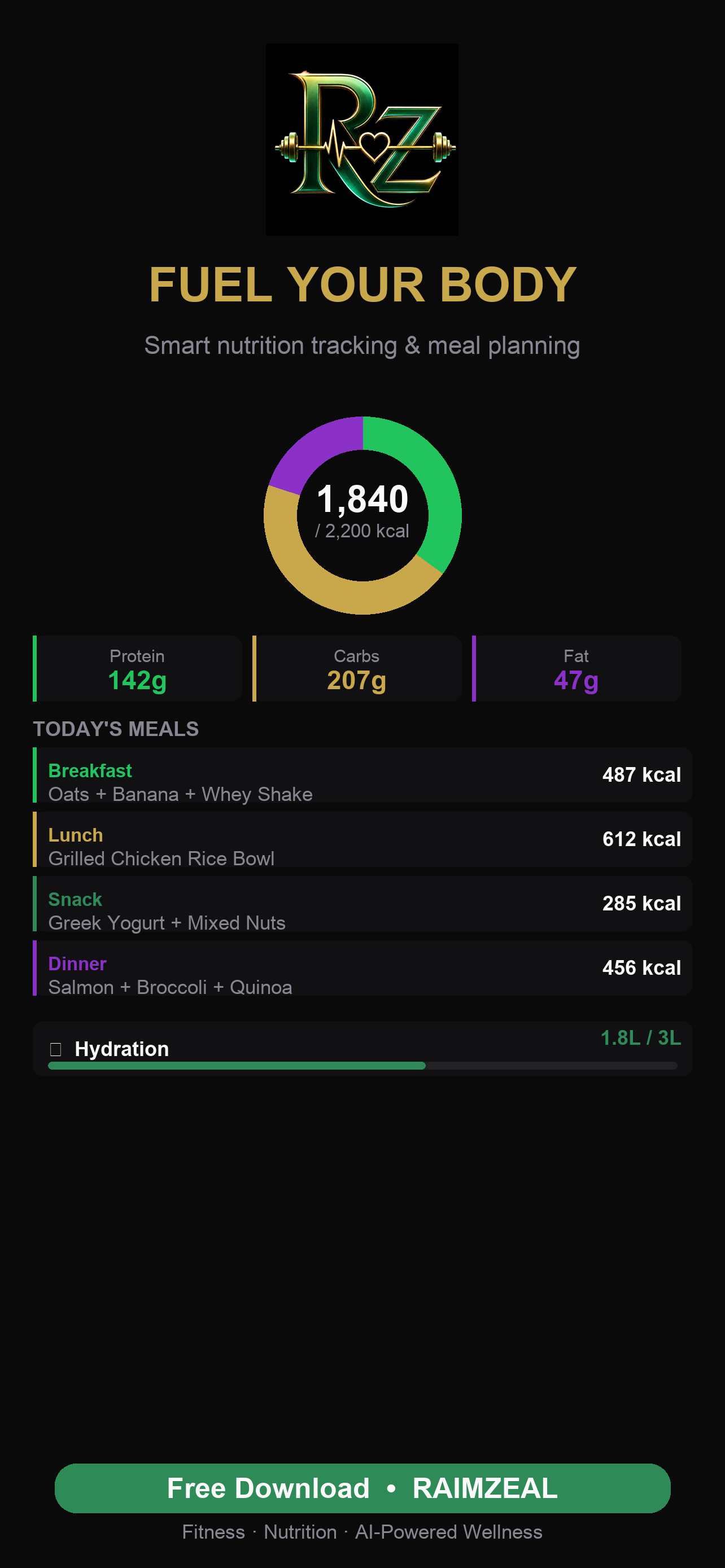
Reading the breakdown without obsessing over it
The most common mistake in macro tracking is treating four targets as four exams to pass daily. That is a fast route to frustration, because a single meal moving twenty grams either way is well inside the noise of any photo-based estimate.
A more useful way to read the numbers:
- Treat protein as a floor you are trying to reach, not a ceiling to hit precisely.
- Treat carbs and fat as a flexible split of whatever energy remains. Most people can move that split around considerably without much consequence.
- Treat fibre as an early warning light. Persistently low fibre usually means the diet is short on whole food, and that finding is more actionable than the number itself.
- Judge yourself on the weekly pattern, not the daily total. One day means very little; five days of the same shortfall means something.
Where to be careful
Photo-based macro tracking has predictable weak spots, and none of them are software bugs. They are situations where the required information was never in the picture.
- Cooking oil and butter. Absorbed fat is invisible and is the single biggest reason a fat figure reads low. Add it manually.
- Sauces and dressings. Already soaked into a salad or stirred into rice, these are calorie- and fat-dense and easy to miss entirely.
- Mixed dishes. In a stew, curry or casserole the proportions below the surface cannot be seen, so the macro split is a reasonable ballpark rather than a precise division.
- Dense versus airy portions. Packed and loosely piled servings of the same carbohydrate look similar from above and are not.
- Visually identical fat variants. Full-fat and low-fat versions of dairy, dressings and spreads are indistinguishable in a photo. This one hits the fat number hardest.
- Drinks. Easy to leave out of the frame entirely, and they can carry a surprising share of the day.
The fix for all of them is the same and it takes ten seconds: tell the app the one thing the camera could not see, and correct the estimate when you know better. A corrected entry you reuse will beat a fresh scan every time.
Getting more out of a macro tracker
- Shoot at a slight angle rather than straight down, so height and depth are visible.
- Keep something of known size in frame — a fork, a standard plate, your hand — to give portion estimation a scale reference.
- Photograph the components before combining or covering them, then log them together.
- Scan the barcode whenever a package has one. A label is data, not inference, so prefer it every time.
- Add cooking fat as its own line. It is the most valuable single correction available to you.
- Build a small library of your regular meals by correcting each once, then reuse those entries.
- Log the whole day, weekends included. A partial log is a highlight reel, and it will mislead you about your own pattern.
Macro tracking in RAIMZEAL
RAIMZEAL was built by DR. EPHRAIM OVIAWE at ECONTEUR LLC, on the principle that the basics belong to everyone and deeper analysis is there for people who want it. Food scanning follows that ladder:
- Foundation — free forever, with barcode scanning for packaged foods. Photo scanning starts on Rise.
- Rise — improved food scan results, plus the macro breakdown: calories, protein, carbs, fat and fibre.
- Reign — full food scan analysis for the most detailed read on the plate.
- Legacy — everything in Reign plus more.
Your logged meals also feed your coaching context, so when you talk to Ovia AI the guidance reflects the macro pattern you are actually eating rather than the one you planned. That is the same argument for context that runs through AI fitness coach versus a personal trainer. The full ladder is on the membership page, and the FAQ covers the common questions. RAIMZEAL is available on iOS and Android.
When not to track macros
RAIMZEAL is a fitness and nutrition tool, not a medical service, and nothing in a macro breakdown is medical advice or clinical nutrition guidance.
If you are managing a condition where macronutrient intake matters clinically — diabetes, kidney disease, or a therapeutic diet of any kind — work with a qualified clinician or registered dietitian rather than a photo estimate.
And if tracking is starting to feel compulsive, or the numbers are driving anxiety around eating, that is a signal to stop tracking and speak to a qualified professional. Tracking is a tool for awareness. When it stops serving that purpose it should be put down, and food therapy is a gentler way into the same territory.
The short version
Macros are the three energy-supplying components of food, usually reported with fibre. Tracking them answers questions a calorie total cannot — chiefly whether protein is short and whether fibre is missing.
Scanning makes the job fast enough to sustain, which is the whole point. Protein estimates tend to hold up best; fat is the weakest, because so much of it is added invisibly during cooking.
Correct the fat, prefer barcodes, reuse your fixed entries, and read the week rather than the day. You can start free on the download page.
Frequently asked questions
What is a macro tracker?
A macro tracker records not just how many calories you ate but how they were split between protein, carbohydrate and fat — usually with fibre shown alongside. The breakdown answers questions a calorie total cannot, such as whether your protein is consistently short even on days when the total looks fine.
Can a macro tracking app really work from a photo?
It works well enough to be useful, and it is fast enough that people actually keep doing it. The app identifies the foods, estimates the portions, and maps that onto nutrition data to produce the split. It is an informed estimate rather than a measurement, so correct it when you know something the camera could not see.
Which macro is estimated least reliably?
Fat. A large share of dietary fat is added during cooking — oil in the pan, butter in the sauce, dressing already absorbed into a salad — and none of that is visible in a photograph. Protein is generally the most stable of the three, because protein sources tend to be discrete and identifiable on the plate.
Do I need to hit my macro targets exactly every day?
No, and trying to is the fastest route to giving up. Treat protein as a floor to reach rather than a precise target, treat carbs and fat as a flexible split of the remaining energy, and judge yourself on the weekly pattern. A single meal moving twenty grams either way sits well inside the noise of any photo estimate.
Which tier includes the macro breakdown?
Foundation is free forever and includes barcode scanning for packaged foods. AI photo scanning starts on the Rise plan. Rise adds improved food scan results plus the macro breakdown of calories, protein, carbs, fat and fibre. Reign adds full food scan analysis, and Legacy includes everything in Reign plus more. The details are on the membership page.
How do I improve my macro numbers without weighing everything?
Add cooking fat manually, scan barcodes wherever a package has one, photograph components before combining them, and keep something of known size in frame for scale. Then build a small library by correcting each of your regular meals once and reusing those entries — a corrected entry beats a fresh scan every time.
Is macro tracking right for everyone?
No. Plenty of people do well never looking at a macro split, and RAIMZEAL is a fitness and nutrition tool rather than a medical service. If you are managing a condition where intake matters clinically, work with a qualified clinician or registered dietitian. If tracking is becoming compulsive or causing anxiety around food, stop and speak to a qualified professional.